
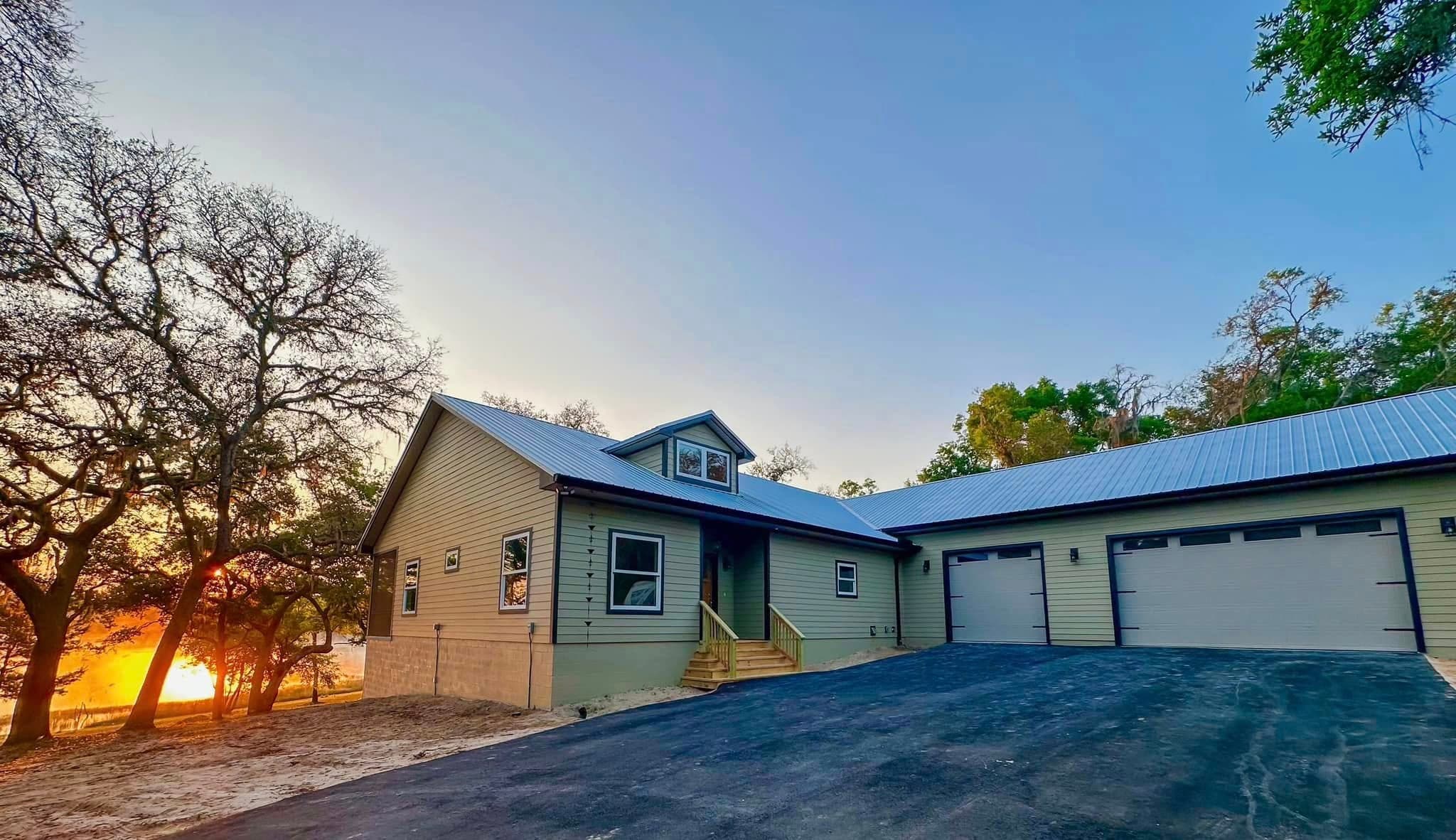
Excavation in Northeast Florida
Foundation, pond, utility and pad excavation on sites where the water table is close and the soil changes across the lot.
Excavation is where the ground stops being an abstraction. What the survey said, what the soil report predicted, and what the bucket actually finds are three different things often enough that the operator's judgment matters as much as the plan does.
We excavate for foundations, pads, ponds, utilities and septic systems across Northeast Florida — on sites where the water table sits close to the surface, the soil can change within a single lot, and whatever comes out of the hole has to go somewhere legal.
What's included
01
Utility locates and site protection
Public and private locates before anything moves, plus tree protection fencing and access matting where the ground or the canopy needs it.
02
Foundation and pad excavation
Footing trenches, stem wall excavation and building pads cut and built to the elevation the plans and the flood map actually require.
03
Pond, basin and retention excavation
Ponds and stormwater basins shaped to the designed volume and side slope, with spoil placed or hauled by an agreed plan rather than an improvised one.
04
Utility and septic trenching
Water, power, sewer and septic trenching at the required depth and separation, bedded and backfilled so the ground doesn't settle over the line later.
05
Dewatering
Pumps, sumps and time built into the plan where the excavation goes below the water table, which on a lot of Florida sites is shallower than owners expect.
06
Backfill and compaction
Material placed in lifts and compacted, with density testing where the engineering calls for it rather than where it happens to be convenient.
How the work runs
01
Review plans and walk the site
Elevations, soil information, access, and where the spoil can go. Those four decide the price more than the volume does.
02
Locates and protection
Utility locates called and marked, protected trees fenced at the drip line, and the access route established before equipment arrives.
03
Bulk excavation
Cut to grade, with material sorted as it comes out so usable fill isn't hauled away and then paid for twice.
04
Dewatering and stabilization
Where we're below the water table, pumps in and the excavation kept workable rather than fought as it fills.
05
Fine grading
Trimmed to the designed elevation and slope, ready for footings, pipe or structure without a second mobilization.
06
Backfill and cleanup
Compacted backfill, disturbed ground stabilized, and the site left in a condition the next trade can actually work on.
What actually drives the cost
- Cut and fill balance
- If material coming out can be used on site, you pay to move it once. If it has to be hauled off and clean fill hauled back in, you pay twice plus trucking. Balancing on site is the biggest single saving available.
- Water table depth
- Excavating below the water table means dewatering — pumps, time, and sometimes a permit. It is the difference between a straightforward dig and a managed one, and it is set by your site, not by us.
- What's actually in the ground
- Limestone, hardpan, buried debris and old foundations all slow the machine down. Rock is the expensive surprise, and it is why we would rather see soil information before quoting.
- Access and equipment size
- Machine size is limited by what can physically reach the work. A job that has to be done with a mini excavator instead of a full-size machine takes several times as long.
- Spoil disposal
- Clean fill can often be placed on site or given away. Organic, wet or contaminated material has to go to a facility that will accept it, and that is priced by the load.
Excavation by area
We work across 7 counties from our base in Keystone Heights. Every locality below has its own page covering the conditions specific to building there.
Clay County
- Excavation in Oakleaf Plantation
- Excavation in Fleming Island
- Excavation in Lakeside
- Excavation in Bellair-Meadowbrook Terrace
- Excavation in Middleburg
- Excavation in Orange Park
- Excavation in Green Cove Springs
- Excavation in Lake Asbury
- Excavation in Doctors Inlet
- Excavation in Keystone Heights
- Excavation in Lake Geneva
- Excavation in Penney Farms
St. Johns County
- Excavation in Fruit Cove
- Excavation in Nocatee
- Excavation in Julington Creek
- Excavation in Palm Valley
- Excavation in St. Johns
- Excavation in St. Augustine
- Excavation in World Golf Village
- Excavation in St. Augustine Beach
- Excavation in Switzerland
- Excavation in Ponte Vedra Beach
- Excavation in Vilano Beach
- Excavation in Elkton
- Excavation in Hastings
Related services
Land Clearing
Clearing, grading, driveways and drainage that get a property ready to build on.
Drainage & Stormwater
Grading, swales, culverts and retention that move water away from the structure instead of toward it.
Demolition
Full structure, selective interior, and slab and outbuilding removal — a permitting job as much as a machine job.
Excavation questions
How much does excavation cost?
It tracks volume, access and where the material ends up, not acreage. The same size hole can differ several-fold depending on whether the spoil stays on site and whether we're digging below the water table. We price after seeing the plans and the property.
What happens if you hit rock?
We stop and price it before continuing rather than running the clock. Limestone is common enough in parts of Alachua and Union counties that we would rather know from a soil report up front than discover it with a bucket.
Where does the dirt go?
On site if it's clean and there's somewhere sensible to place it, which is cheapest for you. Otherwise it's hauled, and we'll tell you the haul cost before we start rather than after.
Do you handle dewatering?
Yes. On many sites here the water table is shallow enough that it's a planned part of the work rather than a contingency. Where a dewatering permit is required, we handle that too.
Do I need a permit to dig a pond?
Usually, and sometimes from more than one agency depending on size, location and whether it touches wetlands or connects to another water body. We establish which approvals apply before designing around a shape.
Can you excavate close to an existing structure?
Yes, with the right equipment and shoring where the depth requires it. Excavating beside a foundation without accounting for the load it carries is how buildings crack, so this is a case where the slower method is the only method.
Do you do utility and septic trenching as well?
Yes — water, power, sewer and septic, at the required depth and separation, bedded and compacted so the ground doesn't settle over the line a year later.